







- A +
- A
- A -
As a core tool in drilling operations, the wear and structural integrity of oil drill bits directly affect drilling efficiency and safety. Customers need to scan the drill bit's profile data before drilling at the offshore work site and compare it with post-drilling scan data to assess wear and structural damage. Due to the harsh offshore environment, traditional measurement methods cannot meet the speed, accuracy, and applicability requirements of on-site scanning. Therefore, handheld 3D scanning technology is chosen to provide precise data support for drill bit performance evaluation and subsequent operational adjustments.
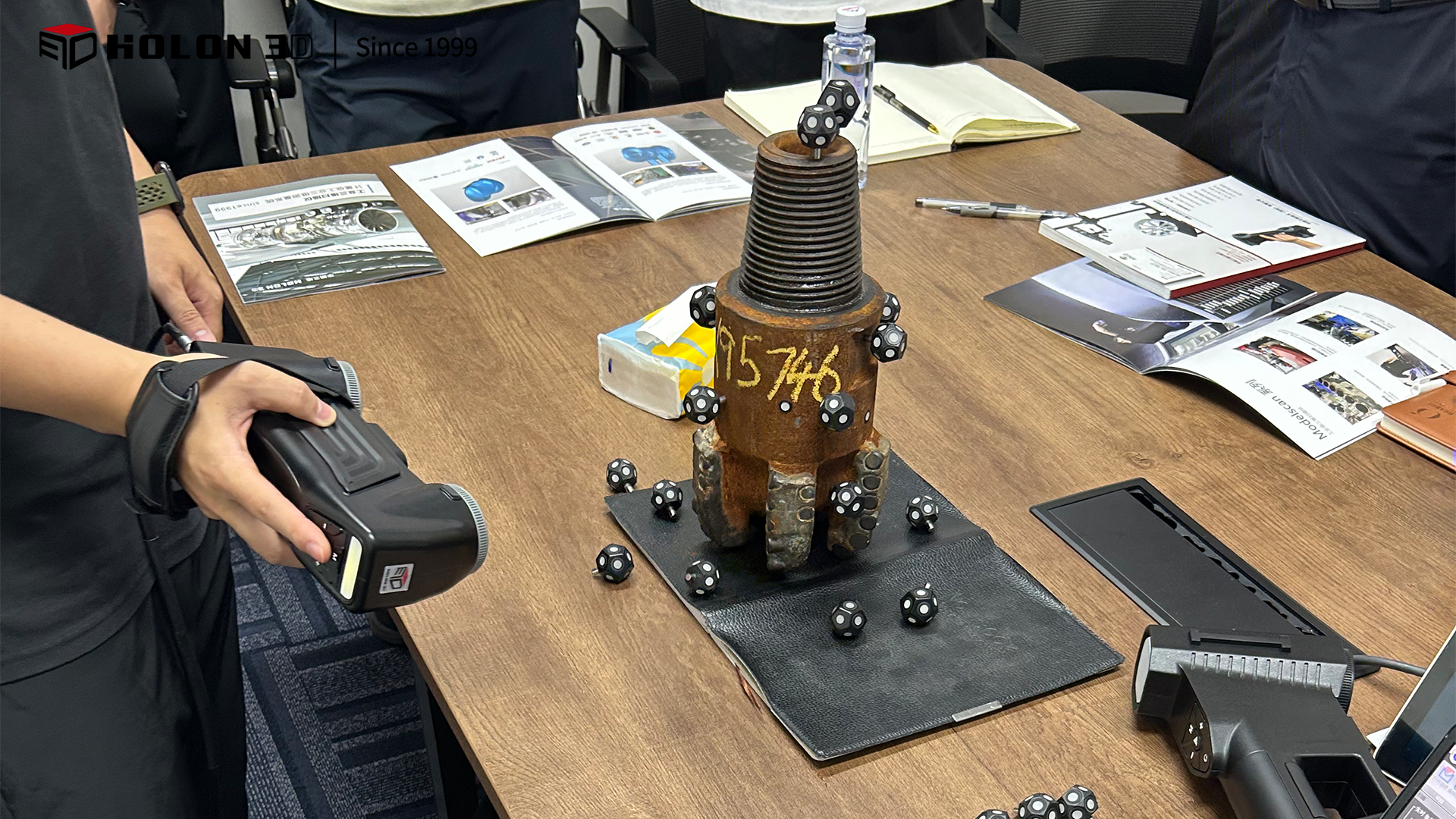
Physical scan image
Oil drill bits have complex structures such as cutting teeth and flow channels on their surfaces. Traditional measuring tools not only struggle to capture the complete contour details, but manual point-by-point measurement is also extremely inefficient and cannot meet the time-sensitive demands of offshore operations. Offshore operations also present challenges such as turbulence, high humidity, and unstable lighting, making traditional measurements susceptible to environmental interference and causing fluctuations in data accuracy, which is difficult to meet the quantitative requirements of wear comparison. Furthermore, drill bits are generally large and have hard surfaces, and contact measurements may cause secondary damage. They also cannot quickly generate digital data that can be directly used for comparison, which seriously affects the timeliness and accuracy of wear assessment.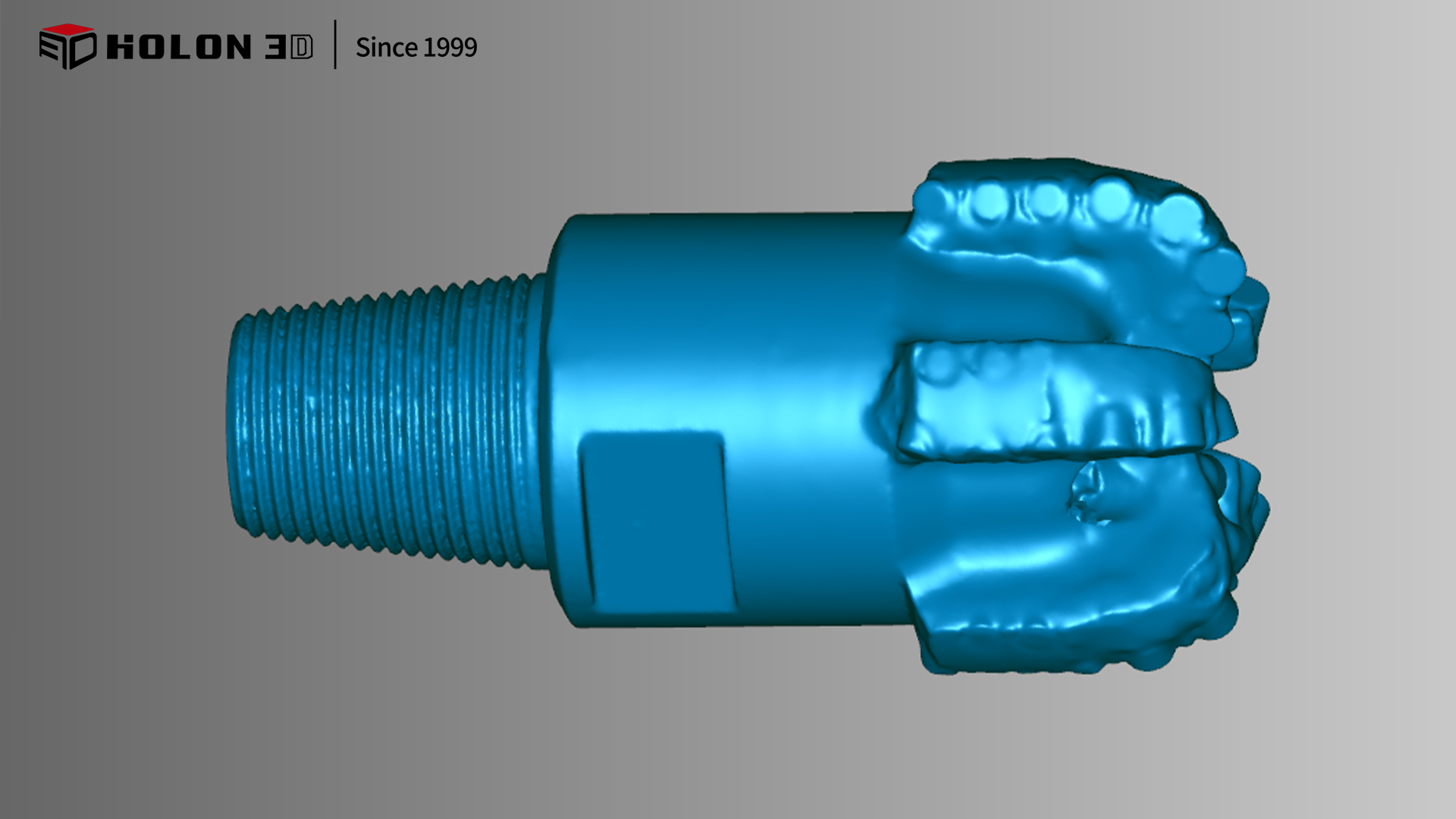
Scan data graph
Employing a handheld 3D scanner, this system is efficiently adapted to the harsh marine environment and drill bit measurement needs. The scanner boasts high precision, accurately capturing minute changes such as cutting tooth wear and flow channel deformation, ensuring minimal errors in profile data before and after drilling, meeting comparison accuracy requirements. Its high-speed scanning capability enables full-surface data acquisition in a short time, adapting to the time-sensitive demands of offshore operations. Its anti-interference design withstands harsh conditions such as sea turbulence, humidity, and lighting changes, and its handheld operation is flexible and convenient, requiring no complex setup. Non-contact measurement avoids secondary damage to the drill bit, and digital data is generated instantly after scanning, directly usable for profile comparison analysis before and after drilling. The resulting data is complete and accurate, fully meeting the customer's high requirements for speed, accuracy, and environmental adaptability, providing a reliable basis for drill bit wear assessment and subsequent decision-making in offshore drilling operations.
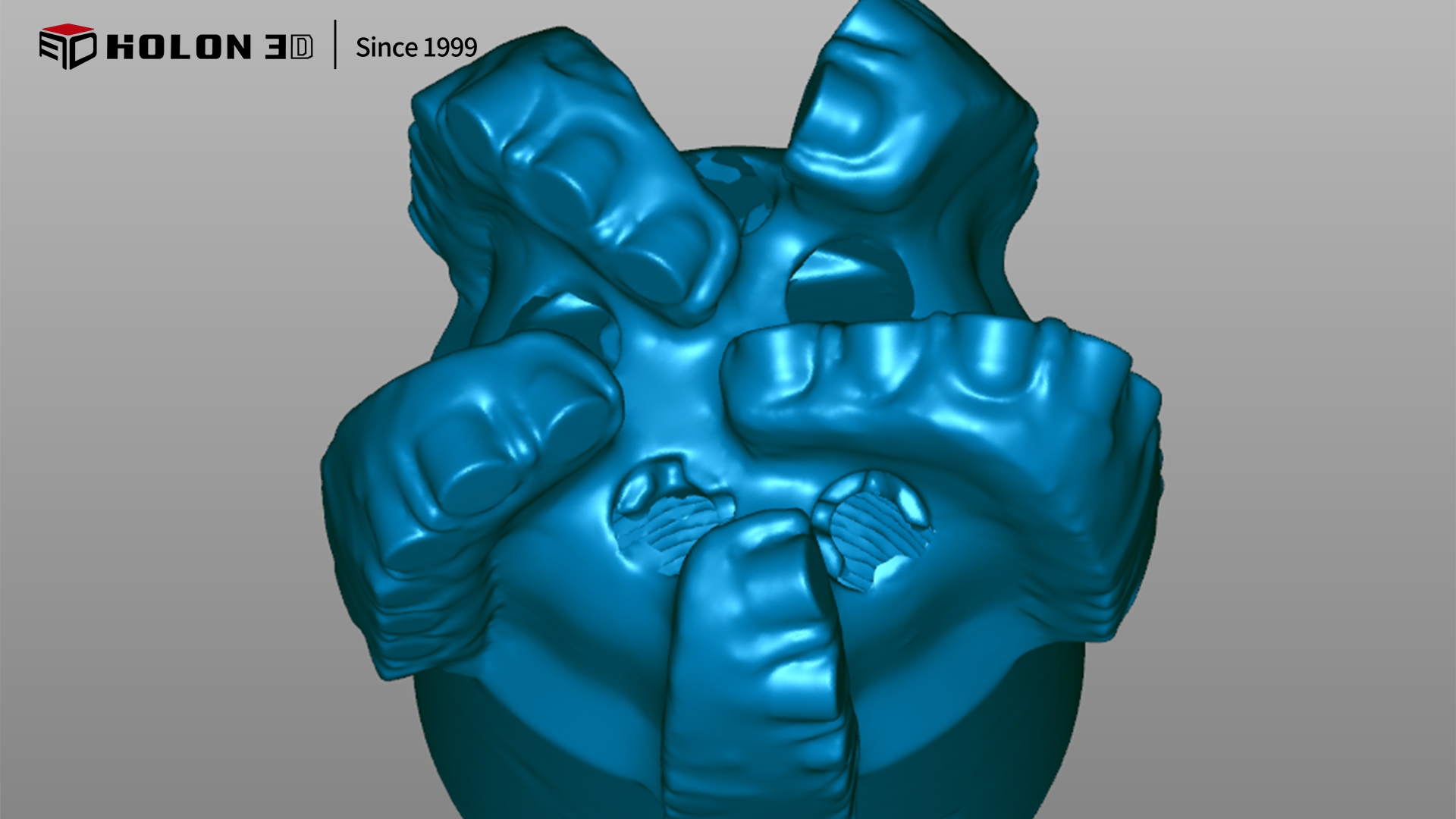
Scan data graph
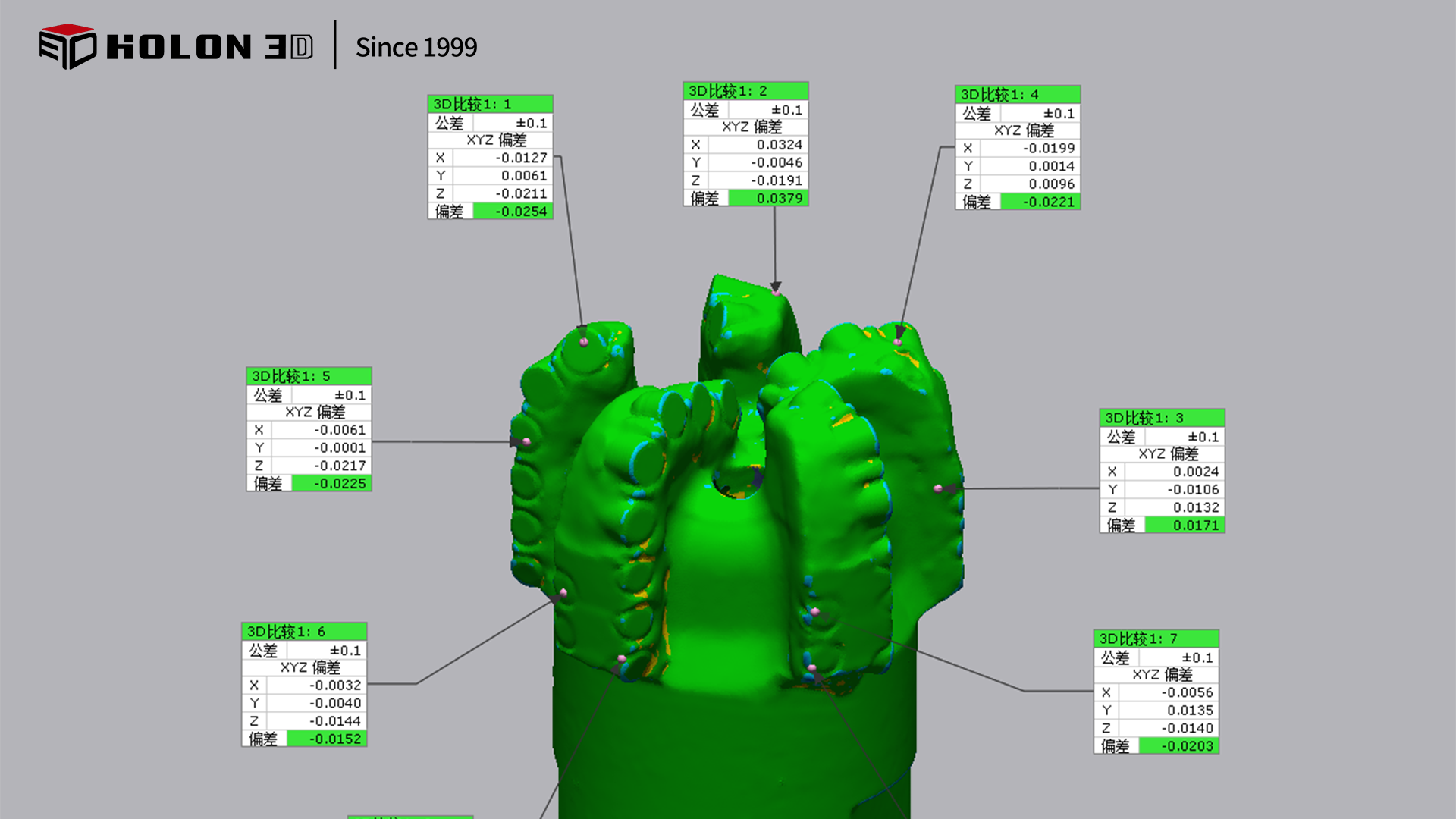
Data comparison chart


