








- A +
- A
- A -
A mobile motor manufacturer planned to reverse engineer imported products and needed to obtain high-precision 3D data. Due to the low efficiency and lack of detail of traditional measurement methods, they ultimately chose Holon 3D scanning technology to achieve rapid modeling and accurate replication.
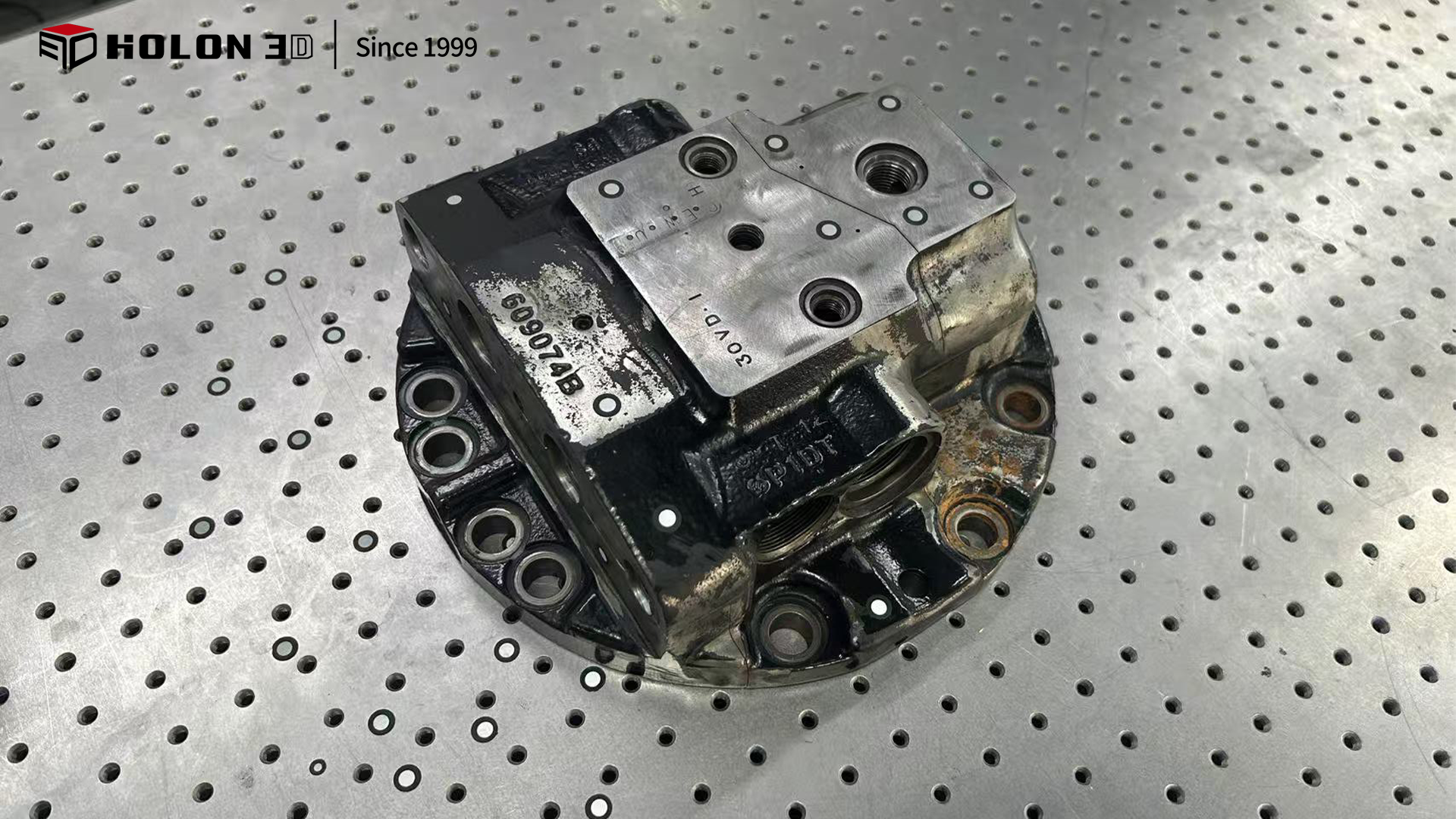
Actual picture of the walking motor
The surface of the walking motor housing has large areas of matte black material that absorbs light significantly, while also having a reflective surface. Ordinary scanners are inefficient at this, and easily lose details. Furthermore, the motor's interior and surface contain heat dissipation holes and threaded holes, making it difficult for traditional equipment to capture the complete structure. This results in insufficient accuracy in the reverse engineering model, impacting the accuracy of subsequent research and development.
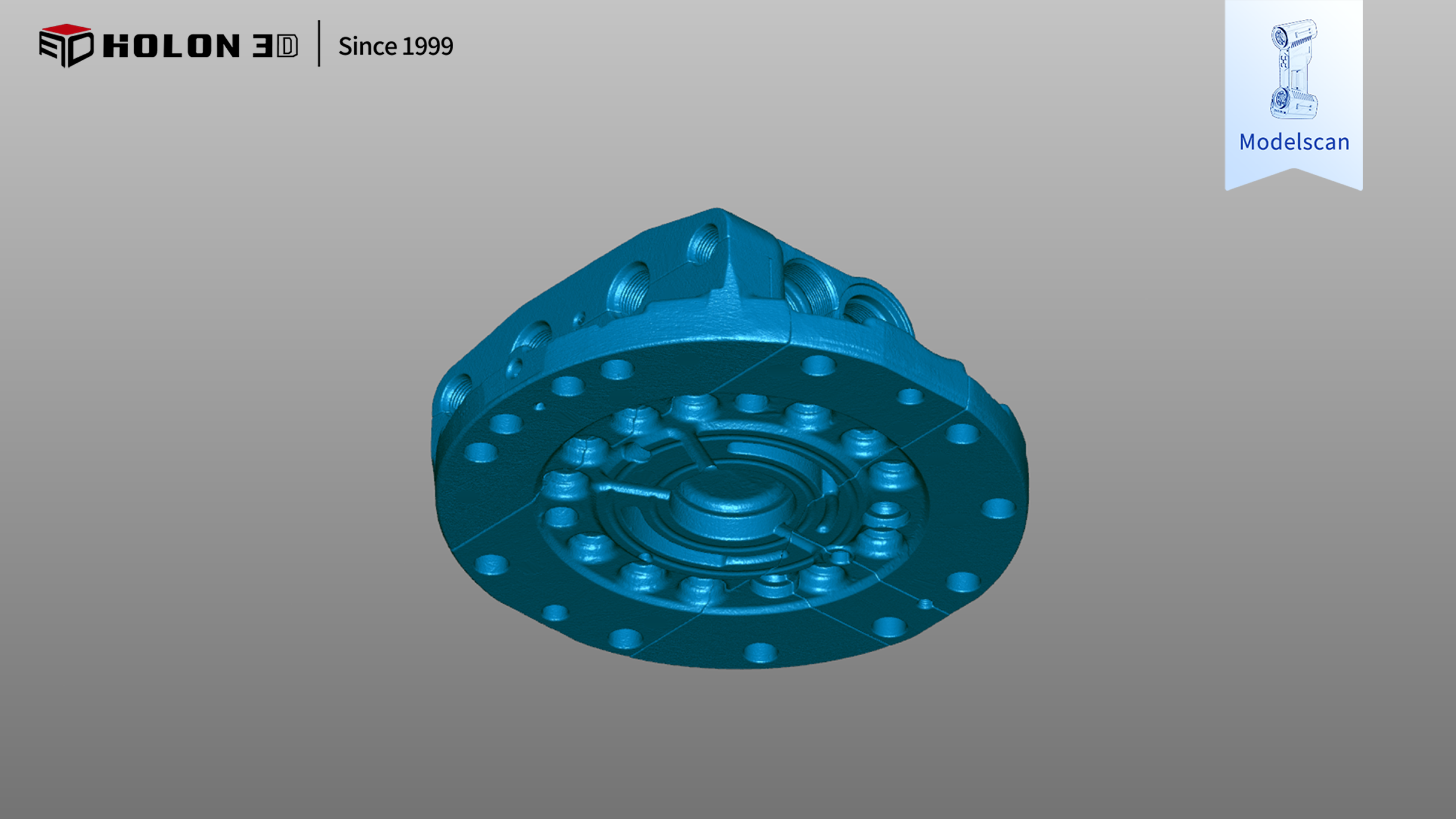
Scan data graph
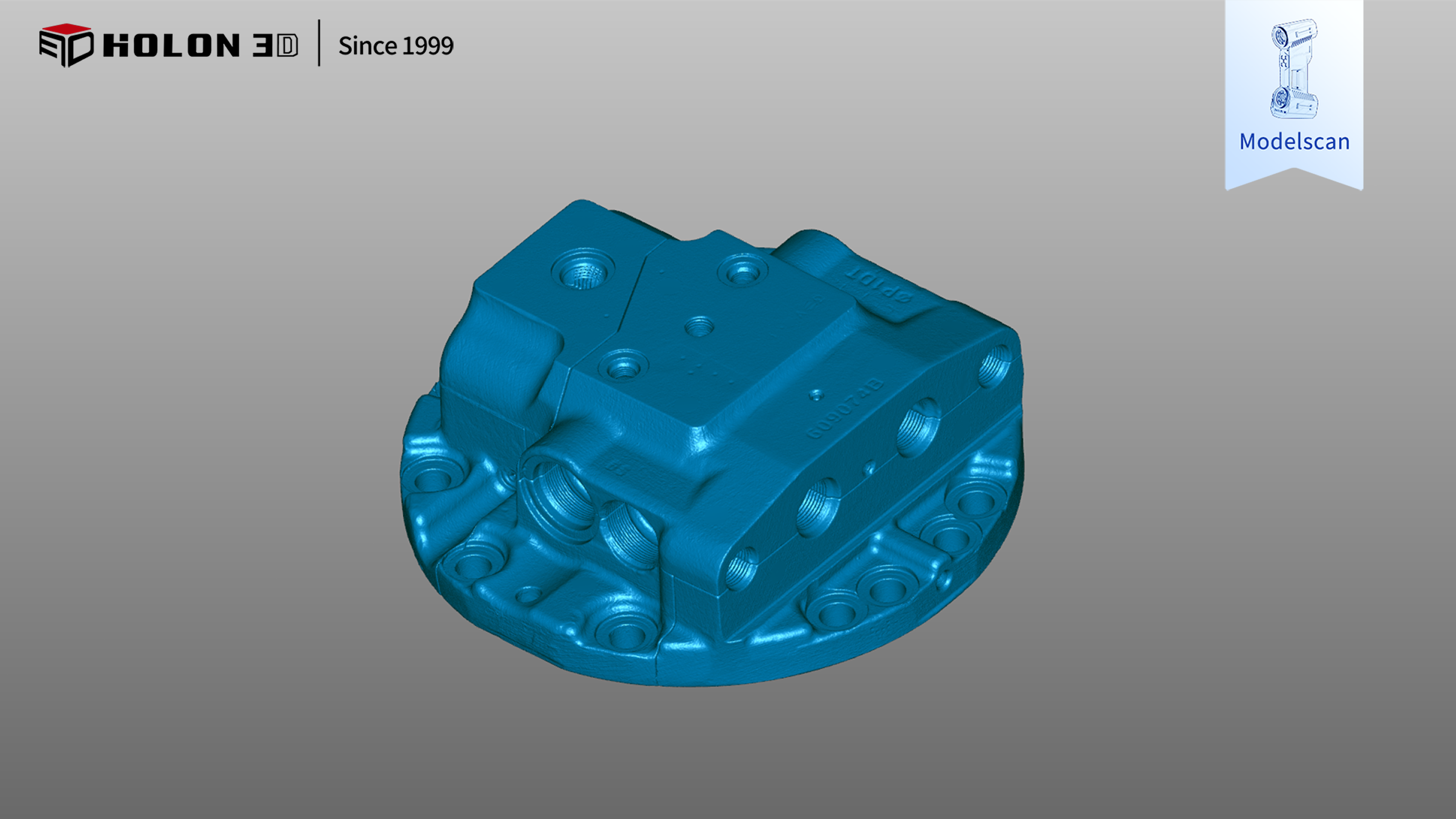
Scan data graph
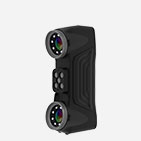
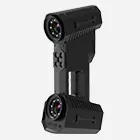
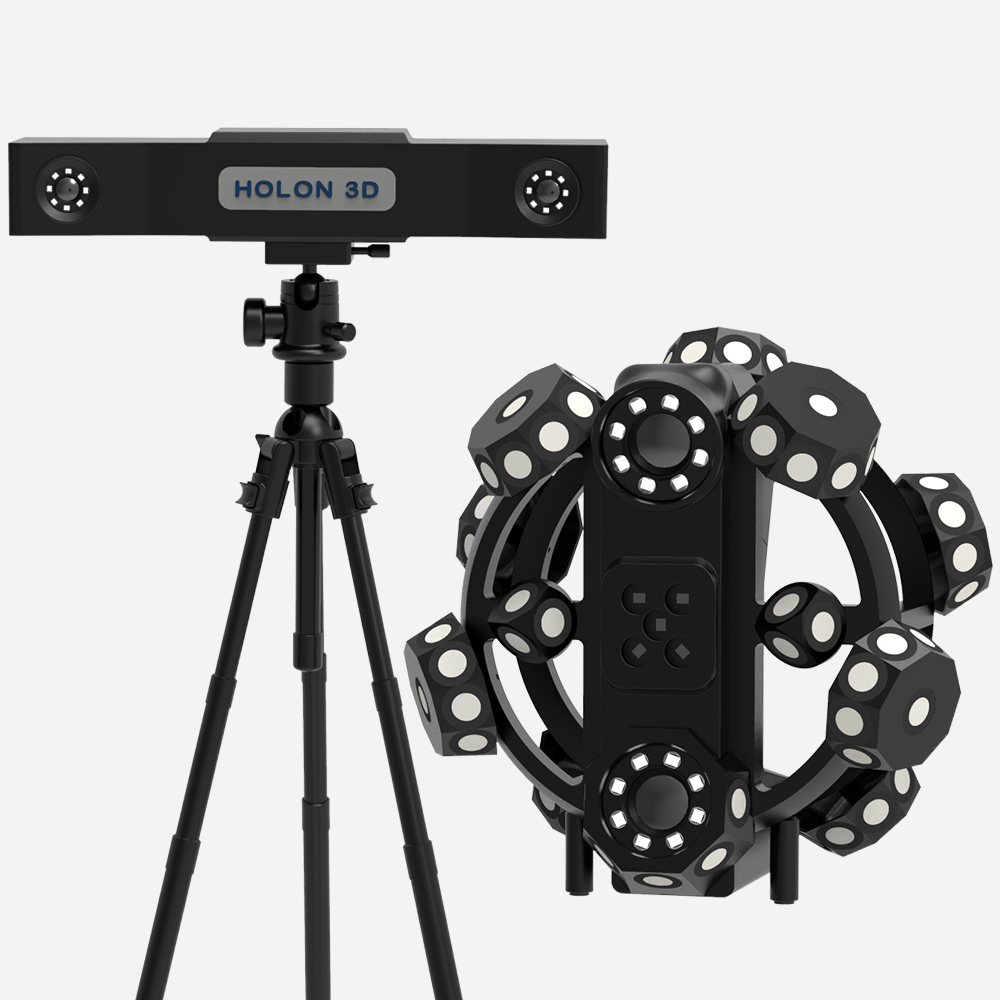
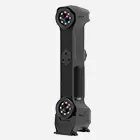
Holon3D employs the Model 49 full blue light scanner, which uses adjustable laser brightness to penetrate black surfaces and intelligently suppress metallic reflective noise. With an ultra-high precision of 0.02mm and a scanning speed of 4.2 million points per second, combined with deep hole and precision modes, it comprehensively acquires key data such as thread profiles and deep hole diameters, enabling rapid full-size reverse modeling. The data can be directly used for reverse design and development.
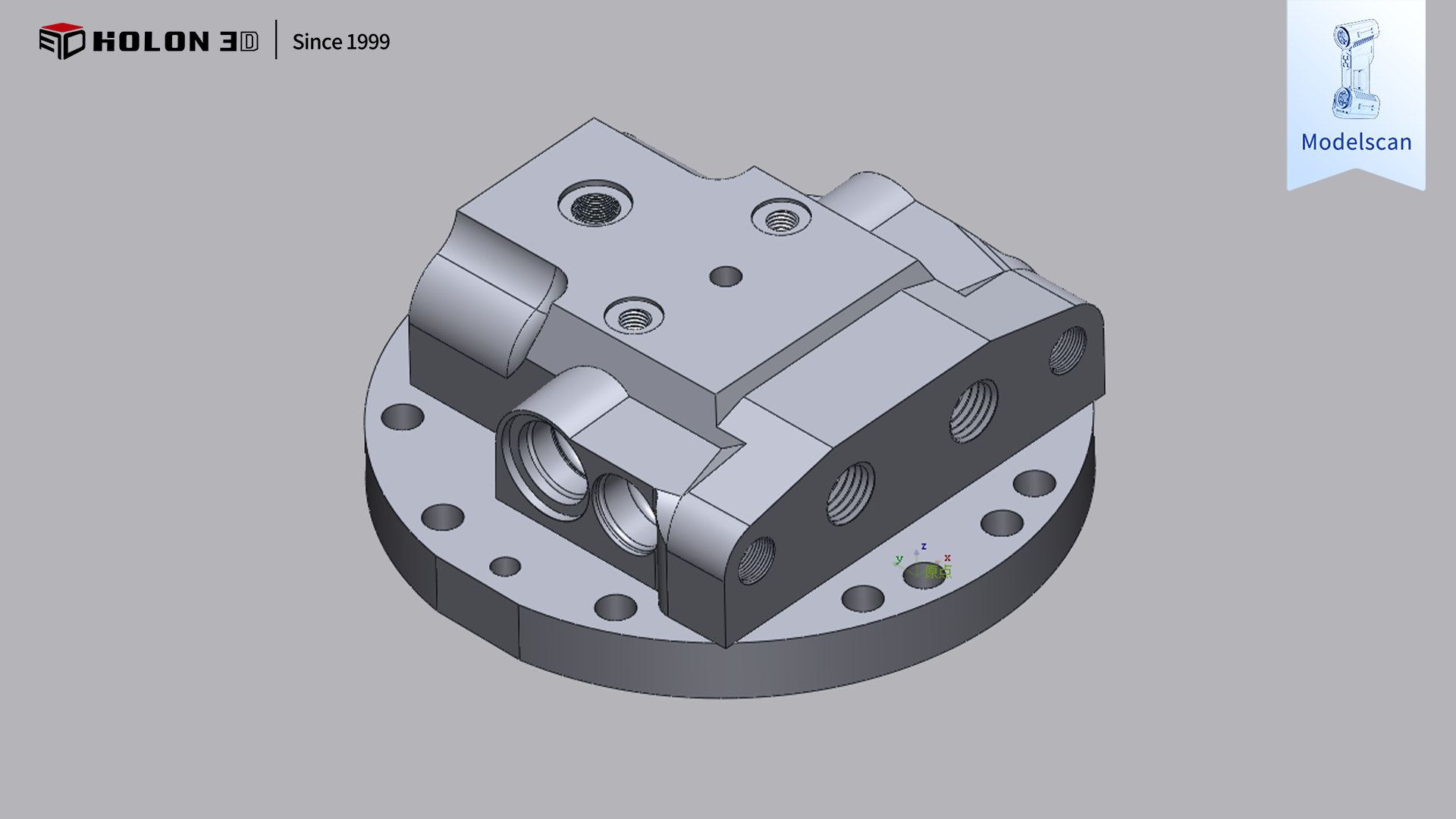
Reverse modeling data
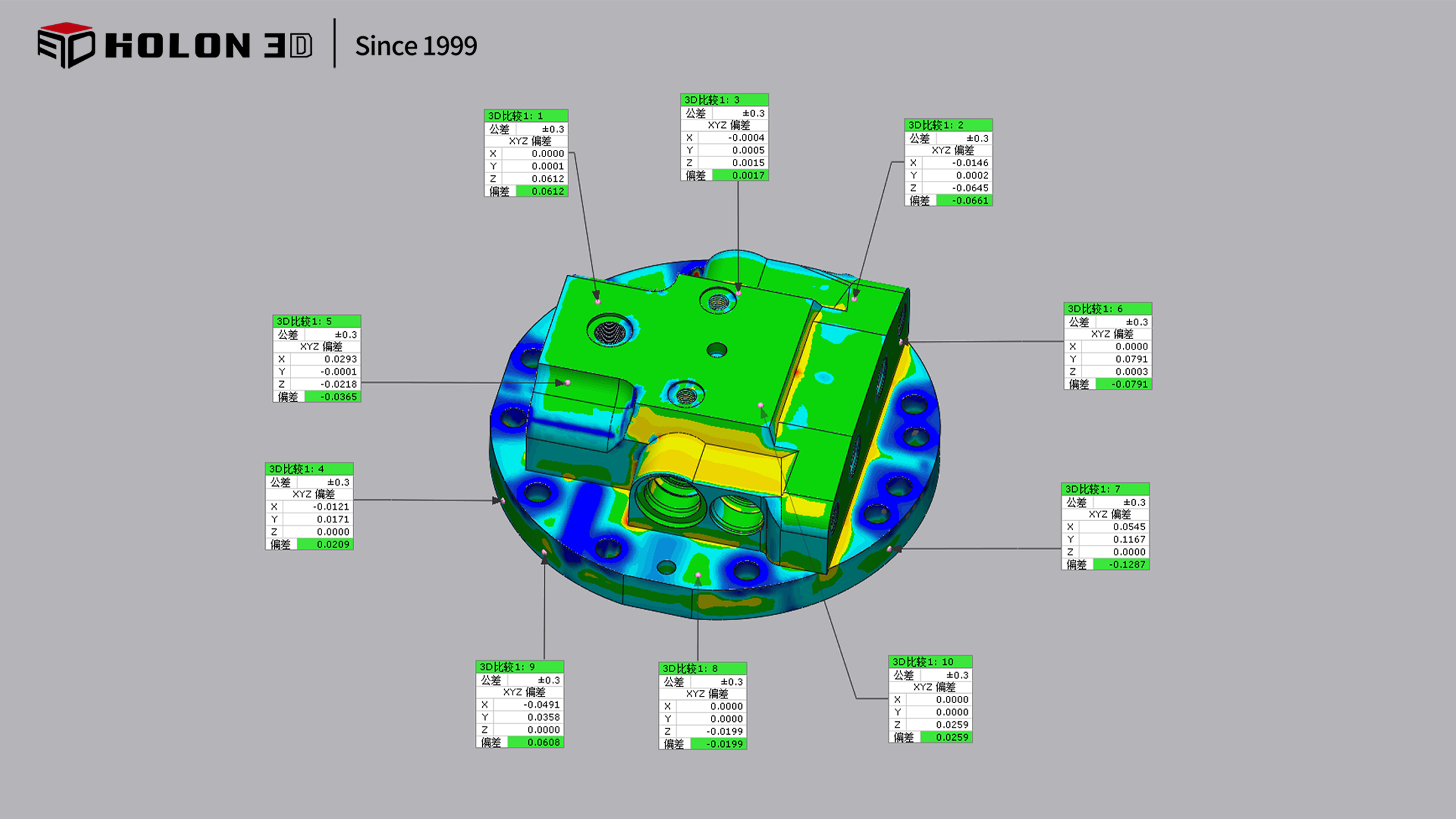
Comparison of data charts
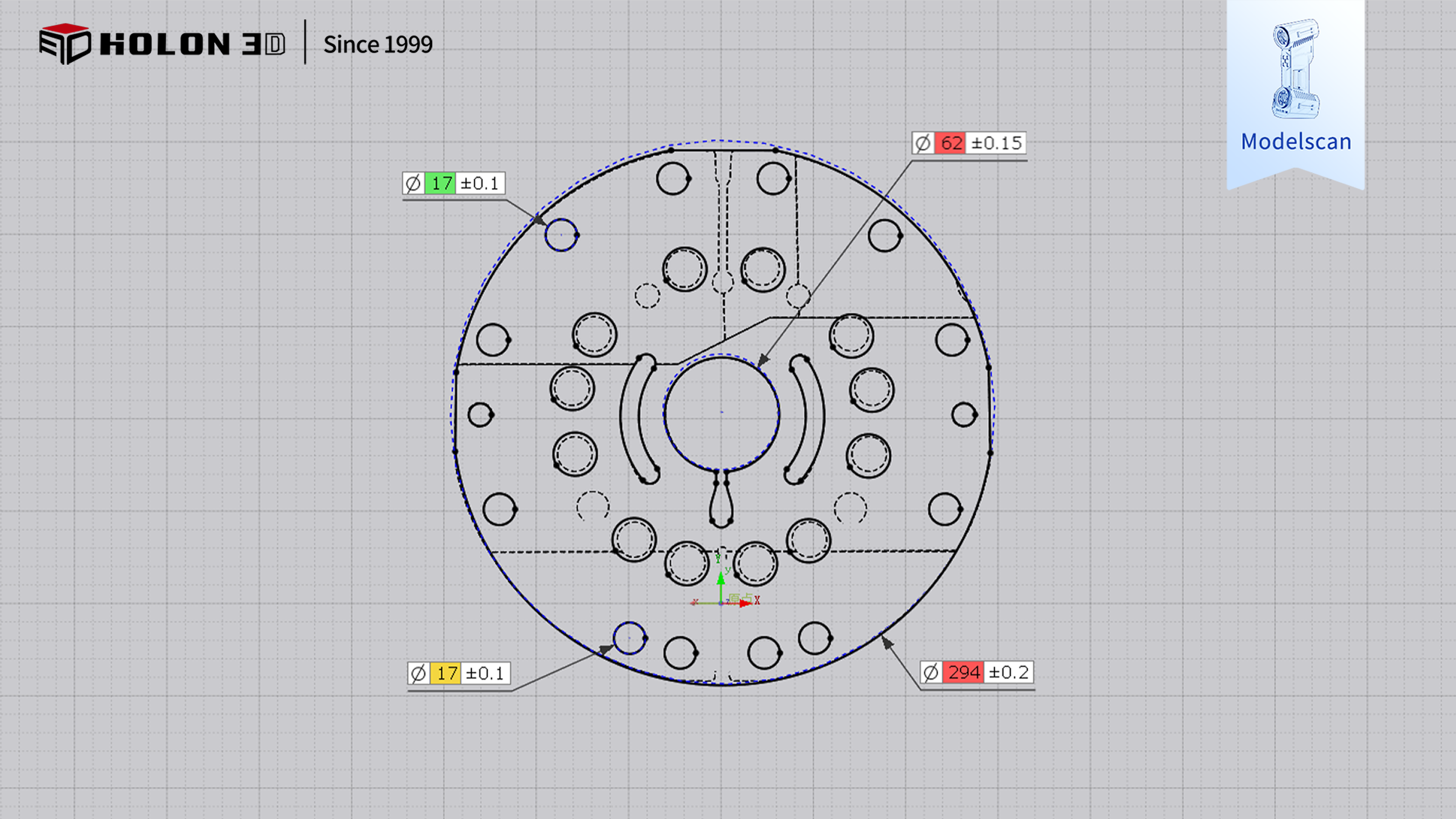
2D cross-sectional measurement data graph


